
Lentung Tungsten Deposit
| Target Type: Tungsten Skarn Deposit |
| Location: Northwest Territories, Canada |
Tungsten Facts
Tungsten, also known as wolfram, is a unique metallic element distinguished by its exceptional physical properties. It has the highest melting point (3,370 °C), highest boiling point (5,900 °C), greatest tensile strength (590,000 lbs) among all metals. It has a high density, equivalent to gold, with a specific gravity of 19.3 g/cc. In addition, tungsten exhibits remarkable hardness, elasticity, ductility, and resistance to corrosion. These properties make tungsten indispensable in modern industry. Its applications span from heavy-duty tools to advanced aerospace technologies
Tungsten is primarily used in the production of steel and non-ferrous alloys, as well as carbide and stellite (cobalt-chromium alloys). These materials are essential for manufacturing products that require extreme durability, such as:
• Tool steels
• Cutting edges
• Hard surfacing components
• Armour plating
Beyond its primary applications, tungsten plays a critical role in several advanced industries, including:
• Electrical systems
• Chemical processes
• Aerospace and space technologies
• Medical field imaging and radiation therapy shielding
Additionally, tungsten alloys are used in surgical instruments and implants. Their biocompatibility and strength provide durability for devices that require long-term implantation and exposure to mechanical stress.
Lentung Property Exploration History
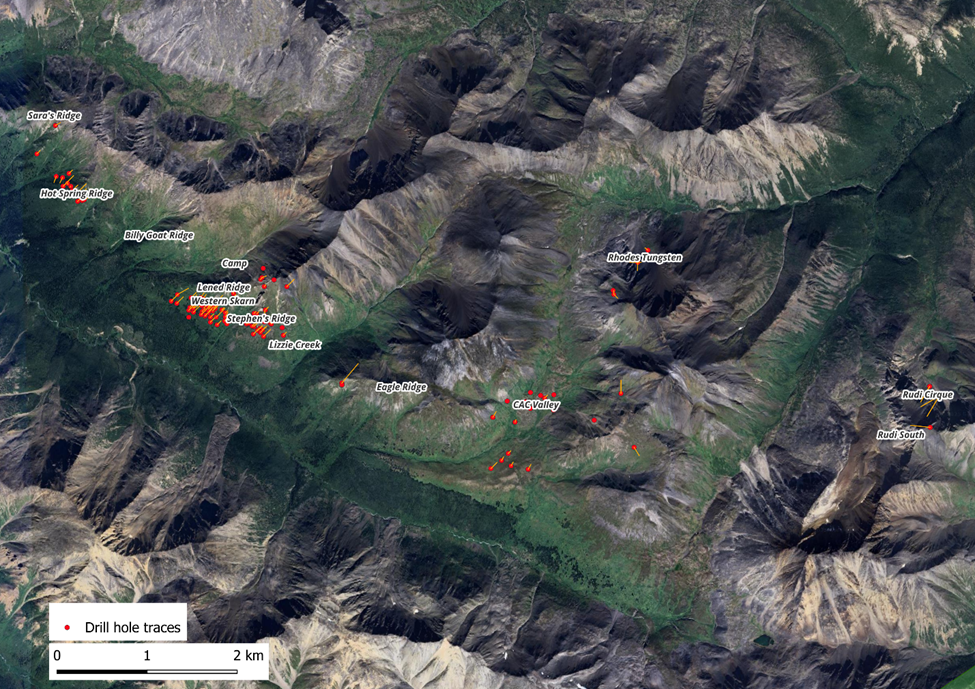
The Lentung tungsten prospect, previously called Lened, was discovered in 1960 by prospectors and tested a year later with 2 short drill holes. The region saw only the occasional, sporadic exploration activities over the next 15 years, during which time a second tungsten skarn occurrence, the Rhodes Tungsten occurrence, was discovered 4.5 km to the east.
In 1976, Union Carbide Exploration Corporation purchased the Lened property and over the next 6 years explored the site intensively, advancing the project to pre-feasibility. Their work included conducting a variety of geochemical and geophysical surveys, detailed geological mapping, metallurgical, economic and environmental studies and drilling 26,900 m in 178 holes. This work led to the discovery of another 15 tungsten mineralized zones over a 10 km strike length.
In 1982, due to declining tungsten price, Union Carbide put the project on hold. In 1984, a subsidiary of Union Carbide, Union Carbide India Limited, suffered a major environmental disaster from its pesticide plant in Bhopal, India. Struggling financially, the company was eventually taken over by Dow Chemical Corporation in 1999. During this period, the Lened property claims were allowed to lapse.
In 1996, the Lened property was re-staked by Yukon prospector Ron Berdahl, and over the next few years, only minor exploration was conducted, eventually leading to the lapsing of the claims in 2014.
Geological Setting
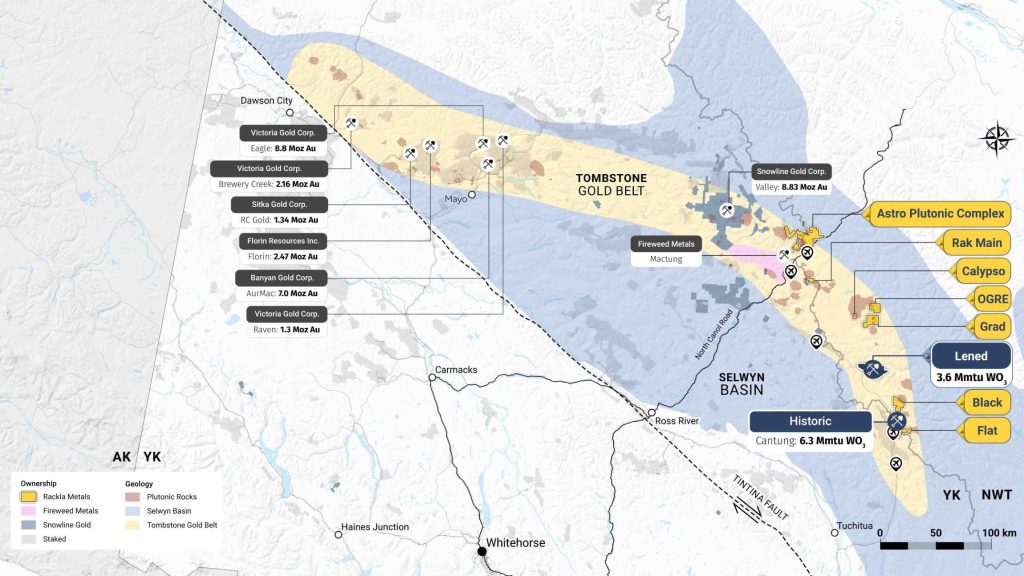
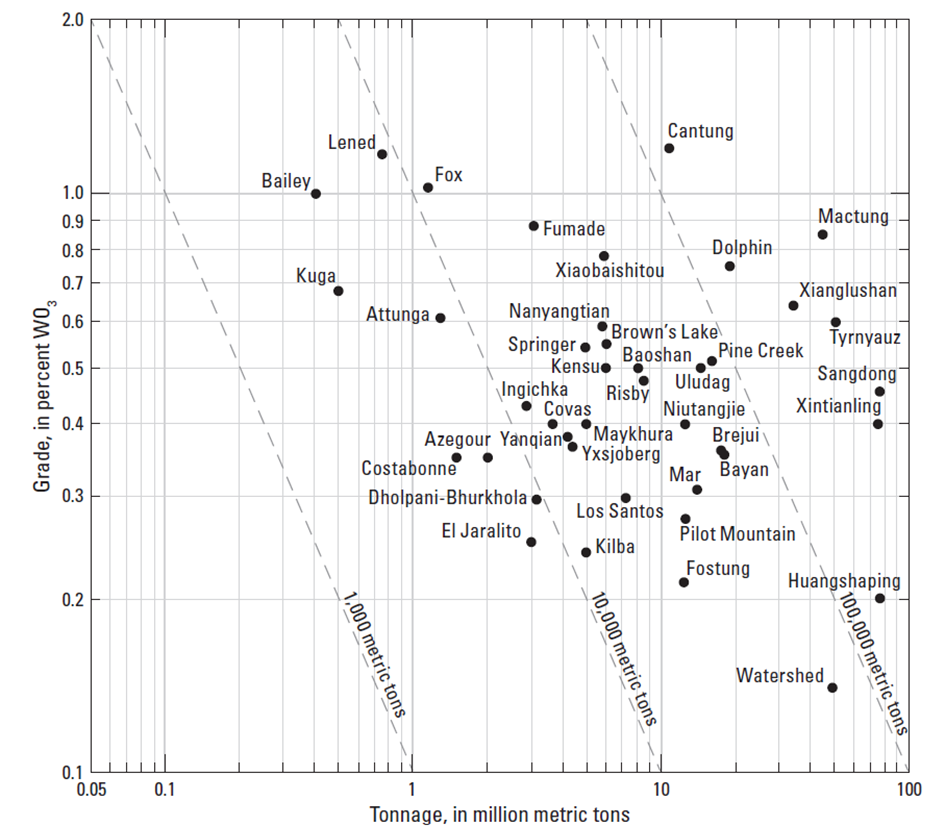
The geological setting of the Lentung area consists of ancient deep water sedimentary rocks of the Selwyn Basin (shale, siltstone and limestone) that have been intruded by younger granitic rocks during the Cretaceous period. The Cretaceous intrusions belong to the Tungsten Suite: a series of intrusions that occur in the eastern Selwyn Basin that are the causative intrusions for the Cantung, Mactung and Lentung deposits, as well as a number of other tungsten-copper occurrences in the eastern part of the Basin.
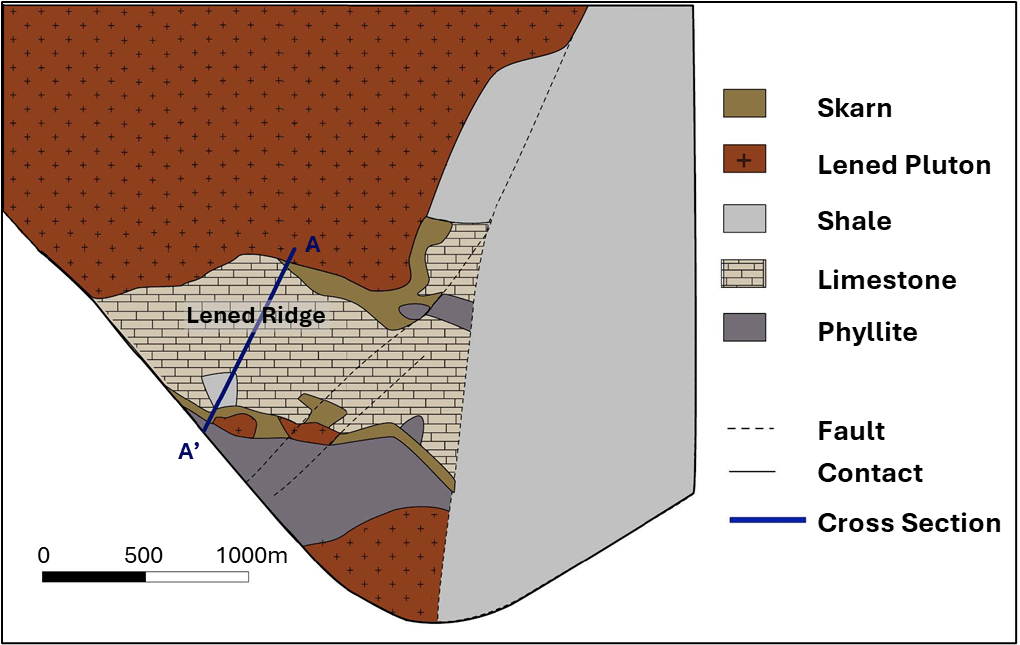
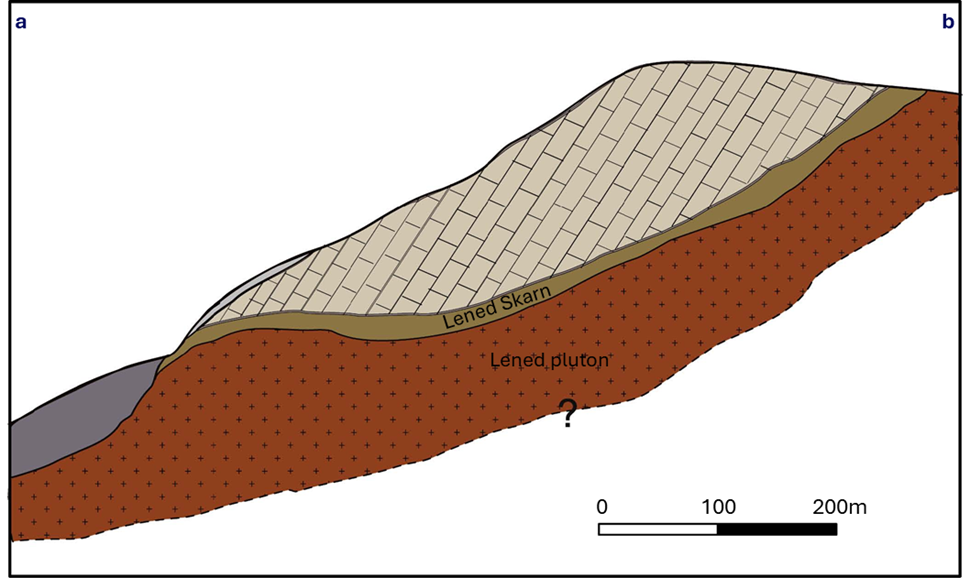
The tungsten mineralization at Lentung is hosted in altered limestone along the margin of the Lened Pluton. Mineralization consists of the tungsten mineral scheelite. There is also significant concentrations of copper and gold associated with the tungsten at Lentung.
Maps
Photos
Core Photos
Coming Soon: Reports
