
Lentung Tungsten Deposit
| Target Type: Tungsten Skarn |
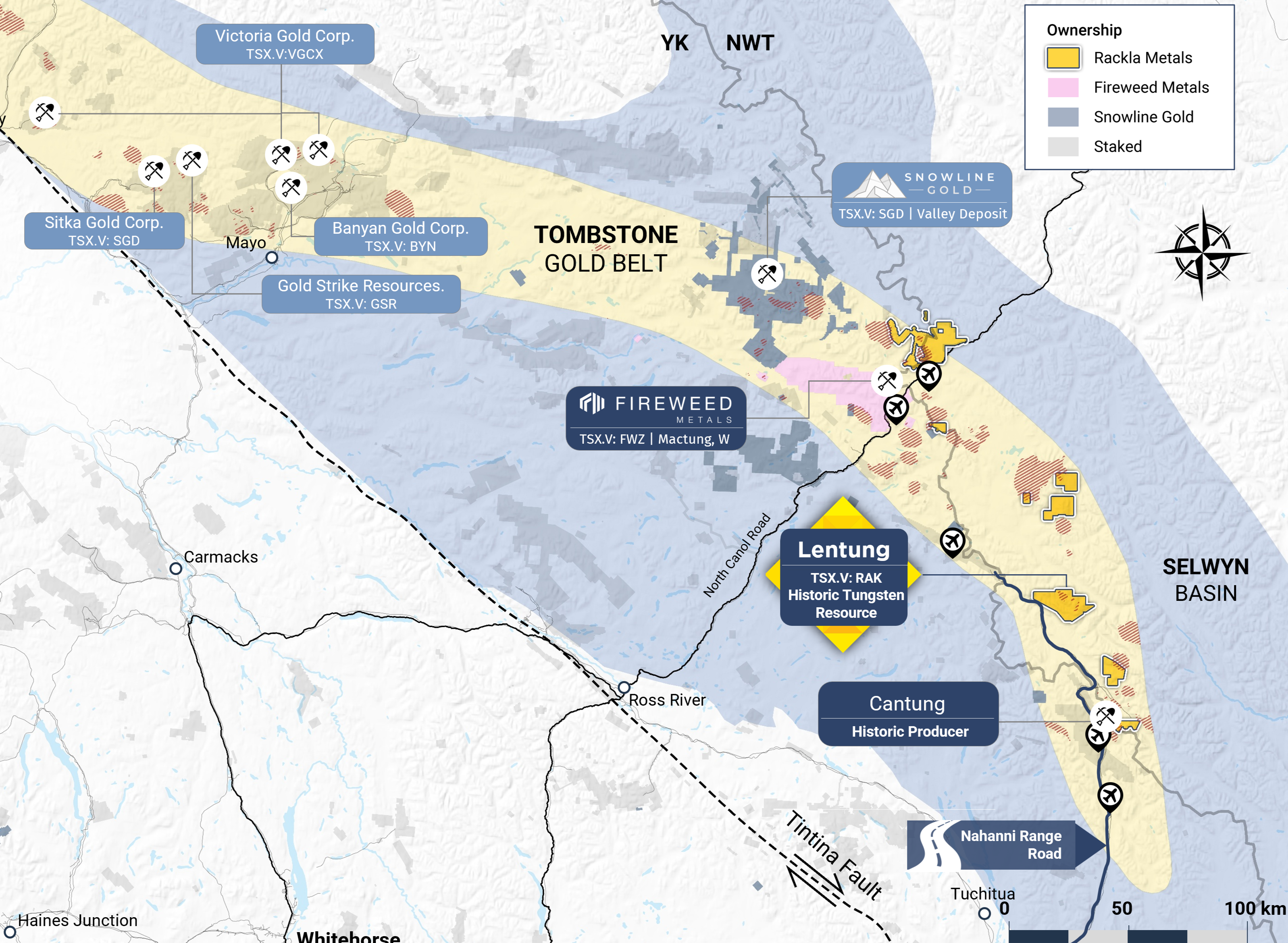
| Location: Tombstone Belt, Northwest Territories |
| Historical Drilling: 26,900 m / 178 holes (Union Carbide 1977-1982) |
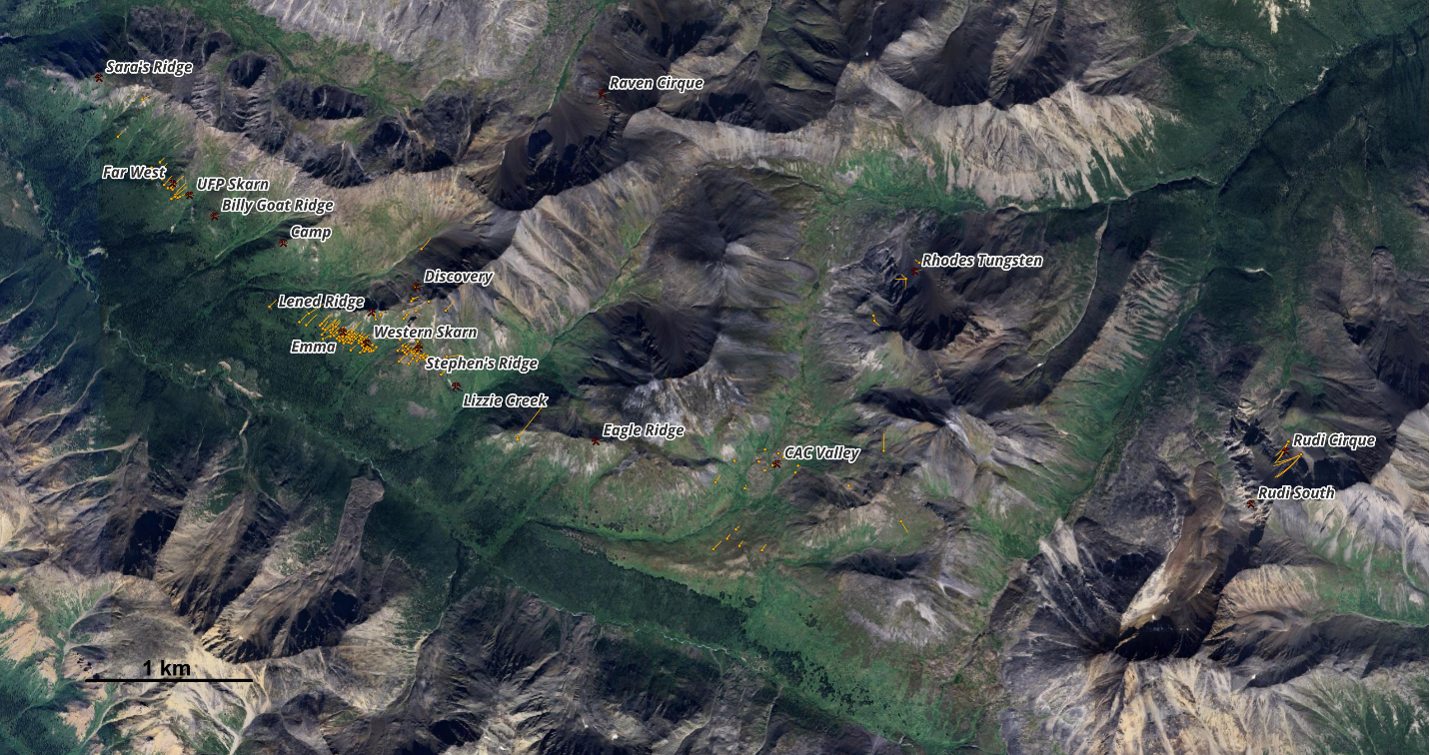
| Occurrences: 15 tungsten zones / 15 km strike |
| Historical Grade: ~1.14% WO3 avg. mill grade (pre NI 43-101 compliance; subject to 2026 verification) |
| Ownership: 100% Rackla Metals – 1% NSR |
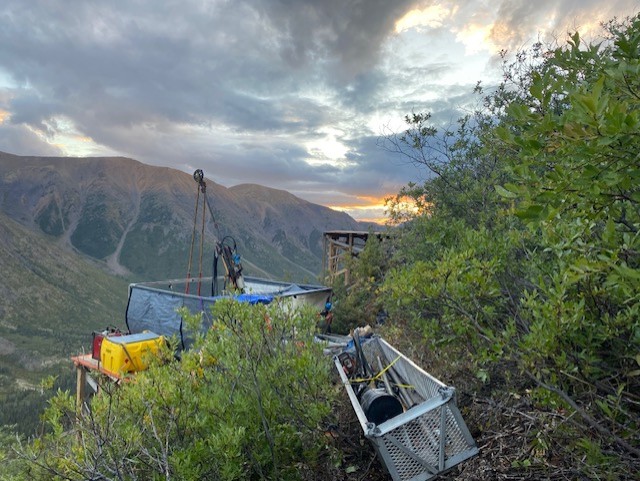
| 2026 Program: 10,000 m drill program underway |
Lentung Property Exploration History
The Lentung tungsten prospect (previously called Lened) was discovered in 1960 by prospectors exploring north of the Cantung tungsten deposit. The region saw sporadic exploration activities over the next 15 years, during which a second tungsten skarn occurrence, the Rhodes Tungsten occurrence, was discovered 4.5 km to the east by Amax Minerals Exploration.
In 1976, Union Carbide Exploration Corporation purchased the Lened property and, over the next 6 years, explored the site intensively, advancing the project to pre-feasibility. Their work included conducting a variety of geochemical and geophysical surveys, detailed geological mapping, metallurgical, economic, and environmental studies. A total of 26,900 m of exploration drilling in 178 holes was completed on the property between 1977 and 1982. This work led to the discovery of another 15 zones with tungsten mineralization over a 10 km strike length.
In 1982, due to the declining tungsten price, Union Carbide decided to pause advancing the project to production, deciding to wait for markets to improve. In 1984, broader Union Carbide corporate setbacks led to a shift in company focus, followed by the eventual acquisition of the company by Dow Chemical Corporation. Under new management and direction, the Lened property claims were allowed to lapse.
In 1996, the Lened property was re-staked by Yukon prospector Ron Berdahl, who undertook only minor exploration focused on the gold potential and a beryl gemstone occurrence. Limited work led to the lapsing of the claims in 2014.
Geological Setting
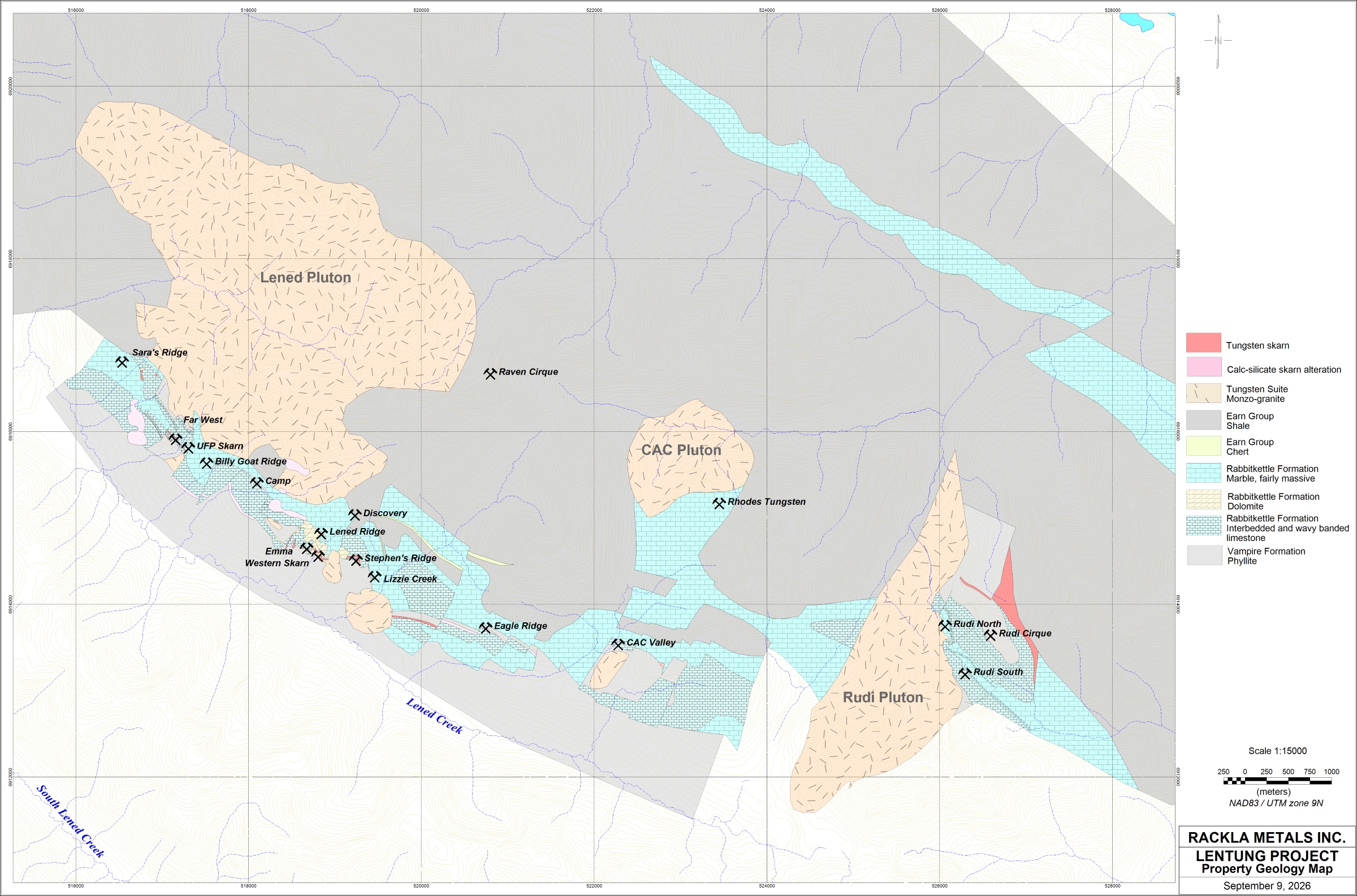
The geological setting of the Lentung area consists of ancient deep water sedimentary rocks of the Selwyn Basin (shale, siltstone and limestone) that have been intruded by younger granitic rocks during the Cretaceous period. The Cretaceous intrusions belong to the Tungsten Suite: a series of intrusions that occur along the eastern margin of the Selwyn Basin that are the causative intrusions for the Cantung, Mactung and Lentung tungsten mineralization.
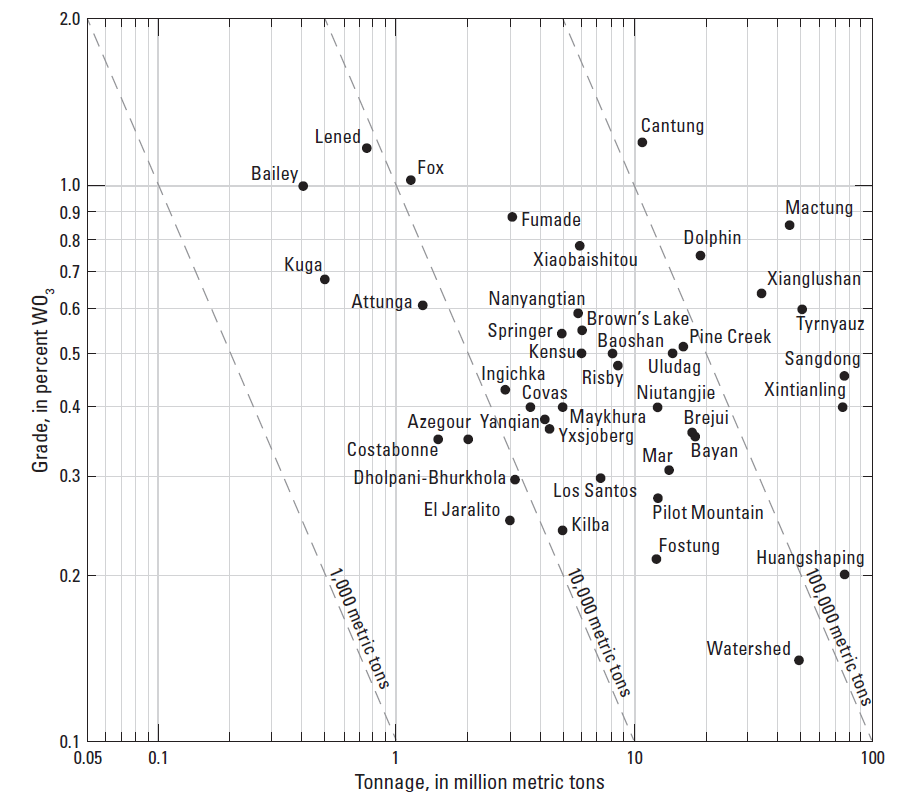
The tungsten mineralization at Lentung is hosted in altered limestone along the margin of the Lened Pluton. Historic resource estimates calculated by Union Carbide rank Lentung among the highest-grade tungsten skarn deposits globally, with grades of 1.27% WO3 (not NI 43-101 compliant). Mineralization consists of the tungsten mineral scheelite and is analogous to mineralization at the former producing Cantung mine. Minor concentrations of copper and gold are associated with the tungsten at Lentung.
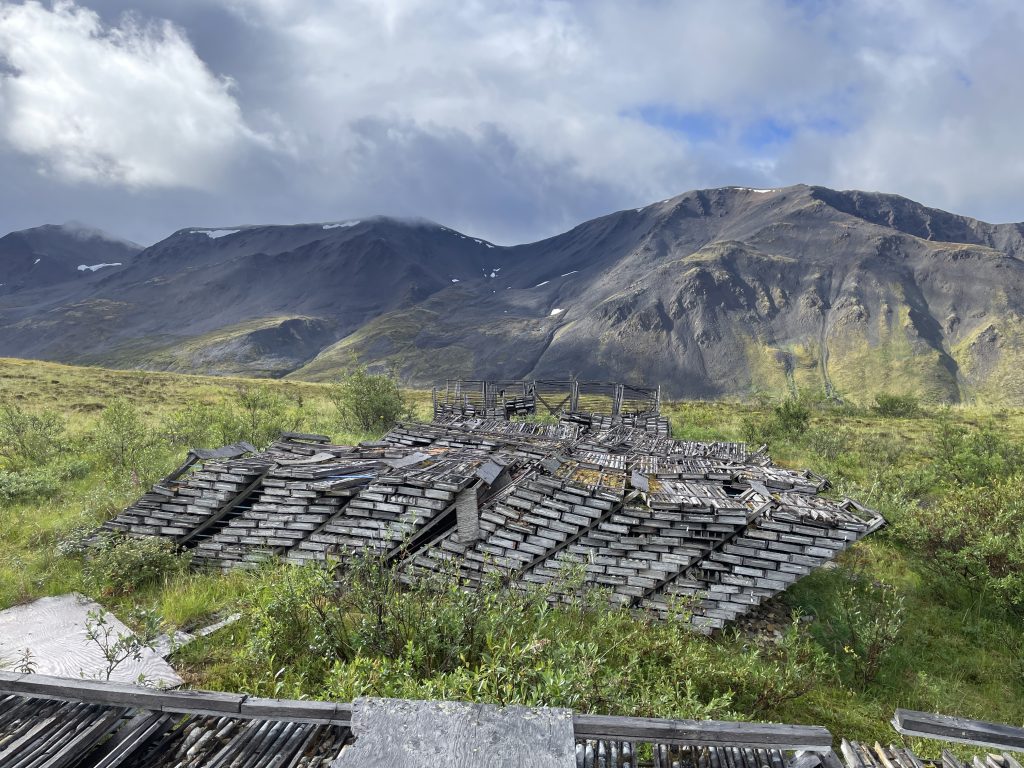
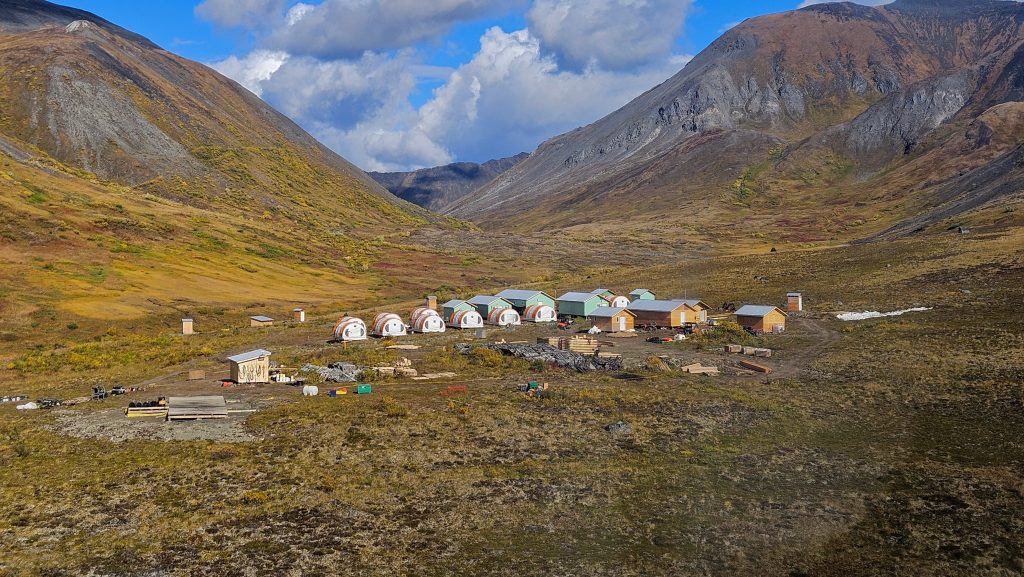
The core from the 1977-1982 drill programs is still located on site and Rackla has begun the process of cataloguing, re-boxing, and eventual re-logging and re-sampling of the core. Union Carbide’s historic data set, paired with the core on-site gives Rackla a unique opportunity to accelerate the evaluation of the property with valuable geological information. This information will eventually be incorporated into an NI43-101 technical report in the near future.
Compilation of Historic Data
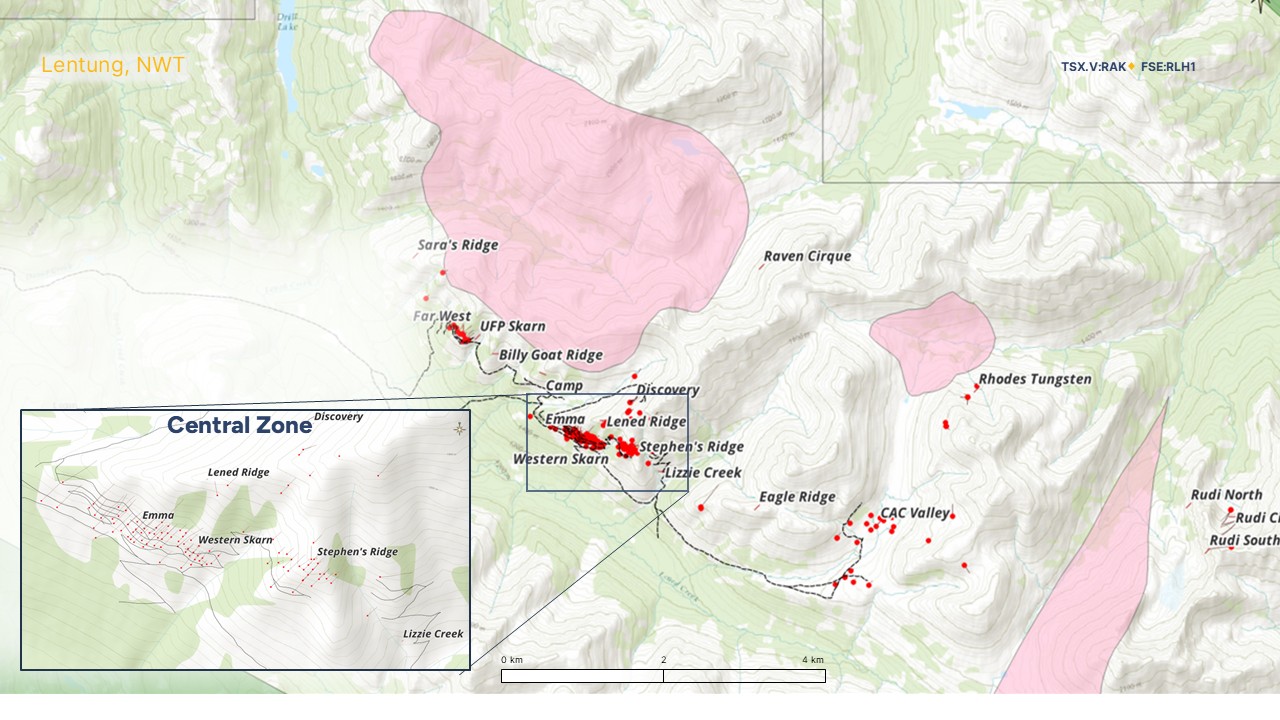
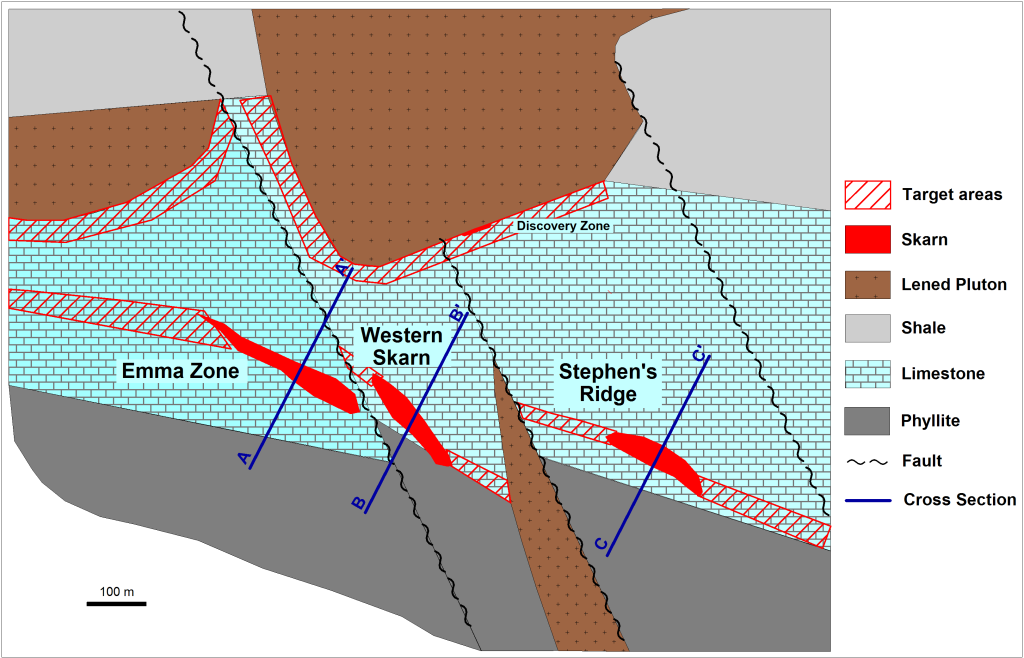
Over the winter and spring of 2025/26 Rackla has been scanning, digitizing and compiling a large dataset of Union Carbide files from 1977 to 1982. This dataset contains a wealth of information and includes original drill logs, geochemical analyses and internal company studies. The majority of drilling has been conducted in the Central Zone, which includes the Emma, Western Skarn and Stephen’s Ridge zones.
Lentung Geology
The Central Zone
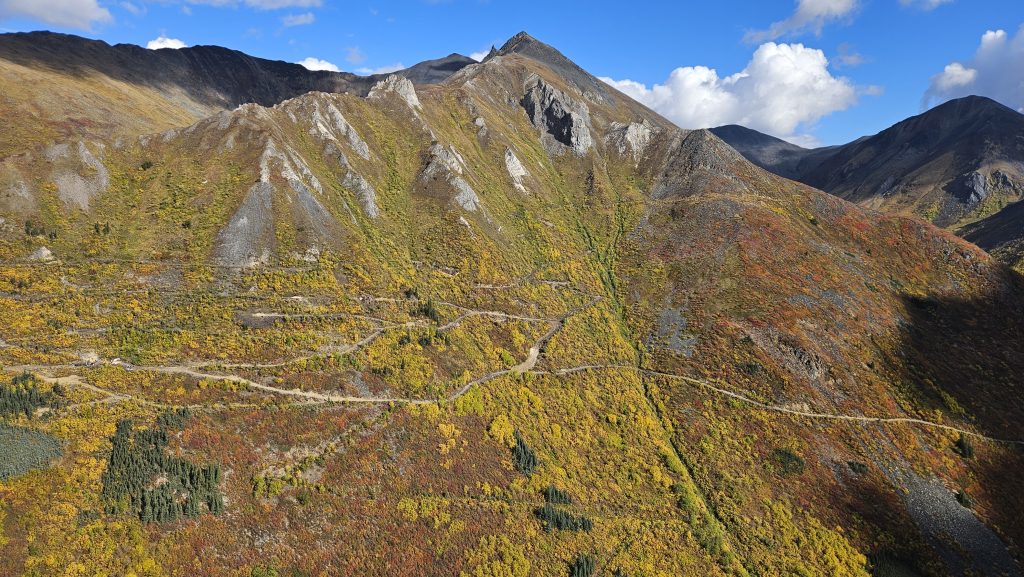
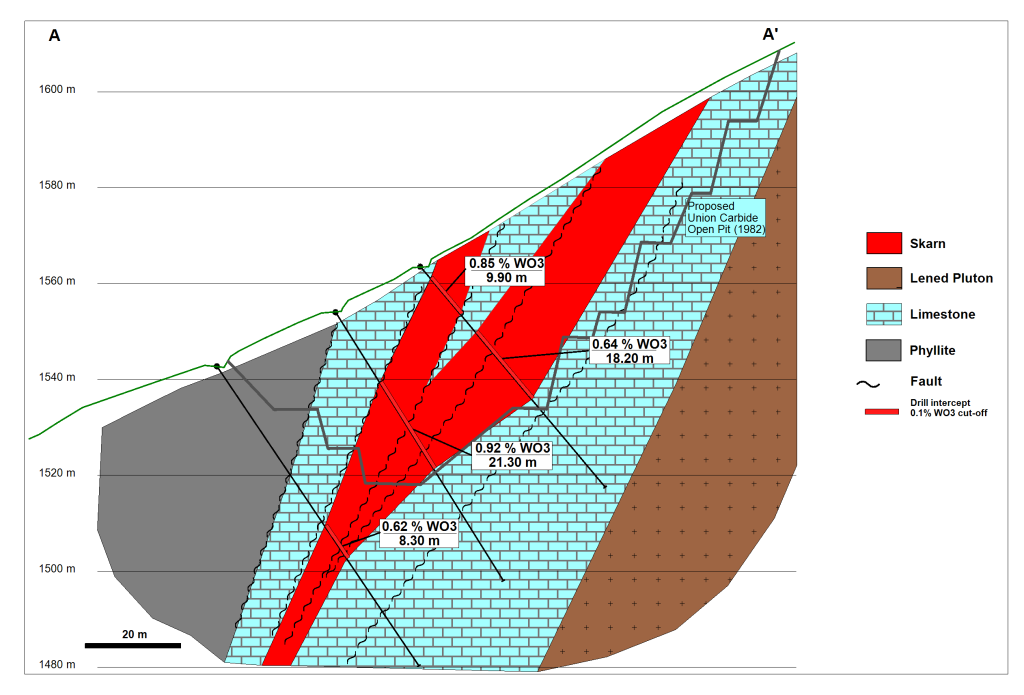
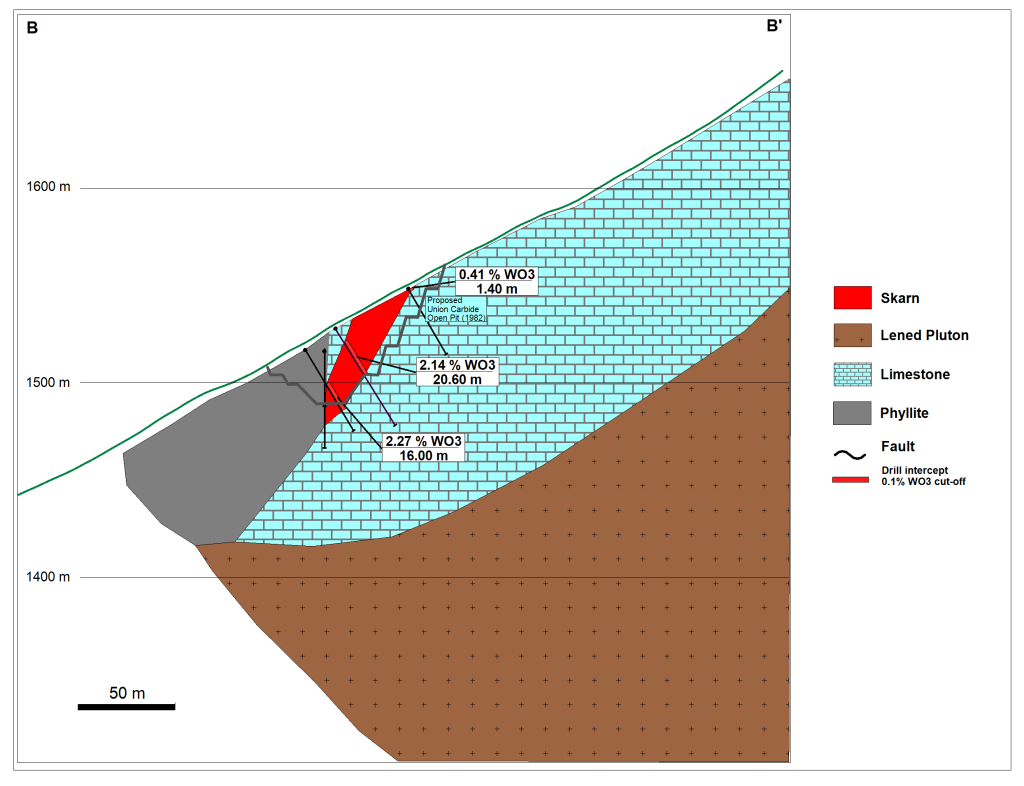
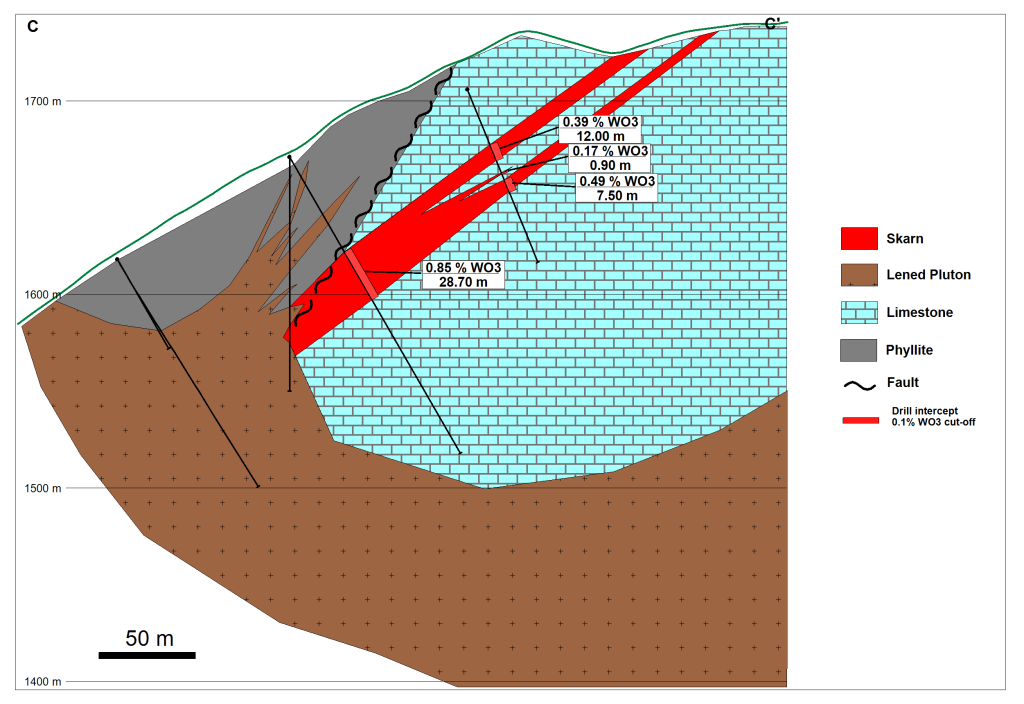
The Central Zone is dissected by thrust faults, which emplace older phyllitic rocks of the Vampire Formation on top of younger limestone of the Rabbitkettle Formation. The thrusting and the uplift associated with the emplacement of the Lened Pluton during the Cretaceous Period have also caused strike-slip faulting, as is evident by the offset of the 3 mineralized bodies in the Central Zone (Emma, Western Skarn and Stephen’s Ridge). This faulting appears to be an important factor in localizing the tungsten mineralization, as can be seen in the 3 cross sections. The proximity of limestone to the Lened Pluton is also an important factor for the formation of tungsten skarns. There also appears to be a connection between the overlying Vampire Formation phyllite with high-grade zones of tungsten. The phyllite may be acting as a “cap rock” to concentrate the mineralizing solutions. The Central Zone has been tested with 105 diamond drill holes.
Far West Zone
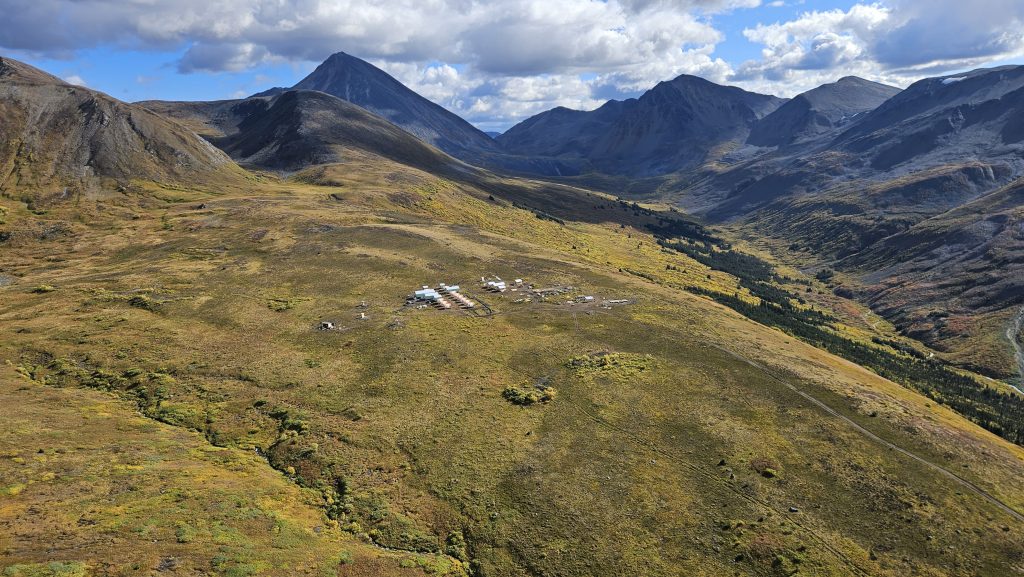
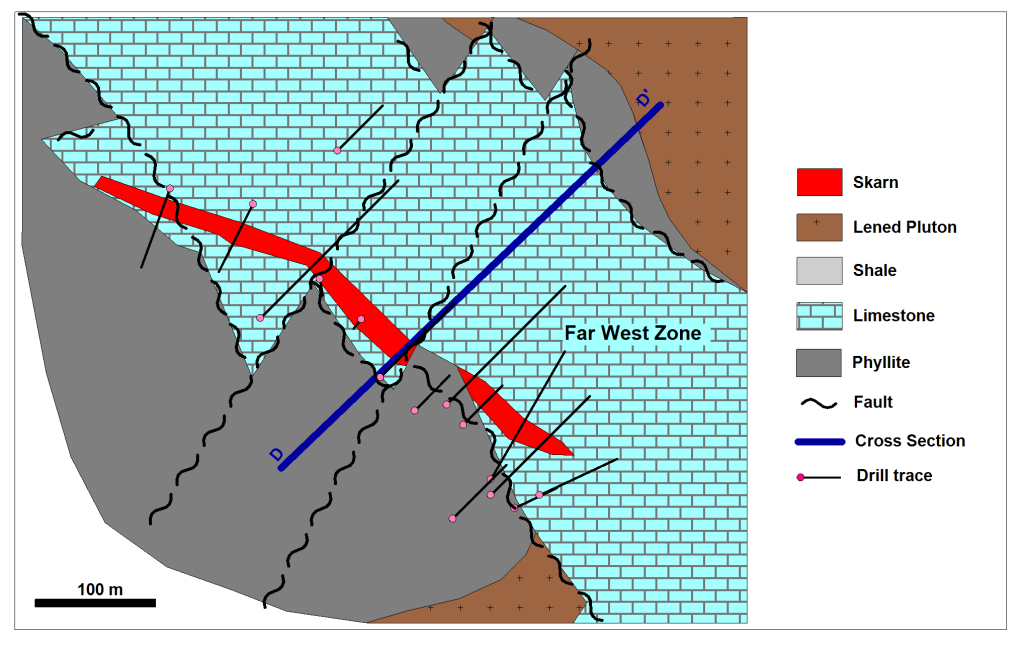
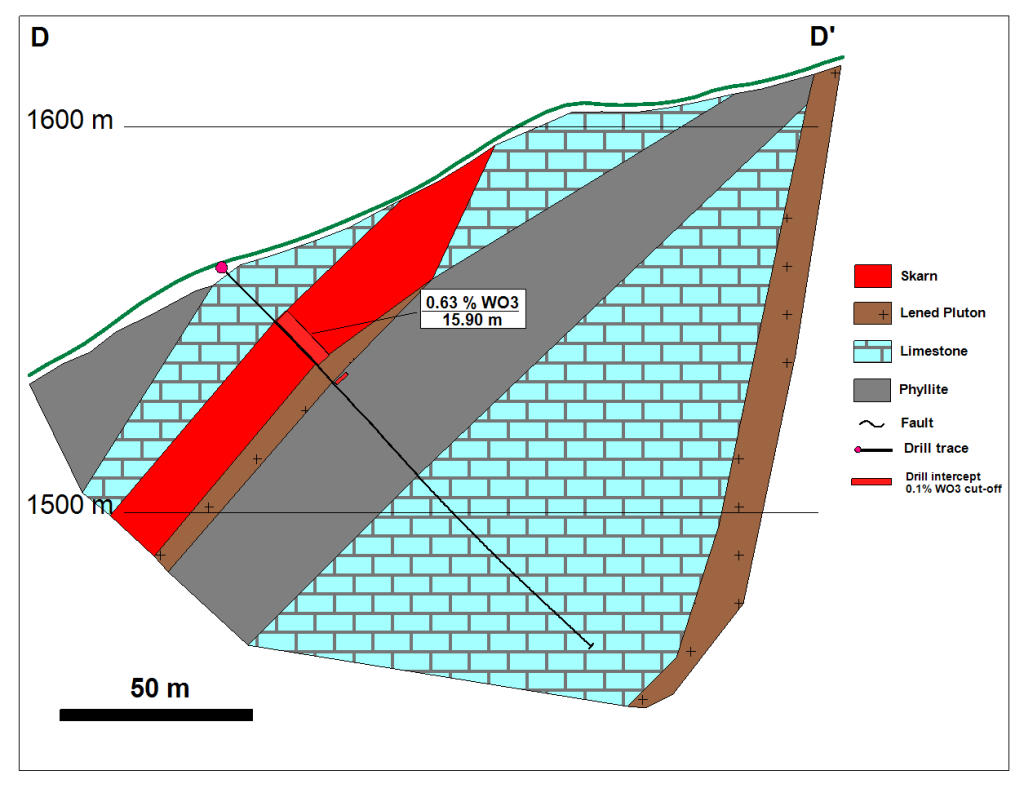
Fifteen holes have been drilled at the Far West Zone (previously called Hot Springs Ridge). Tungsten mineralization in the skarns occurs in two structural environments. One is steeply southwest-dipping in limestone below the phyllite, like the Central Zone. The second structural setting is a wedge of limestone that dips northeast and is underlain by phyllite.
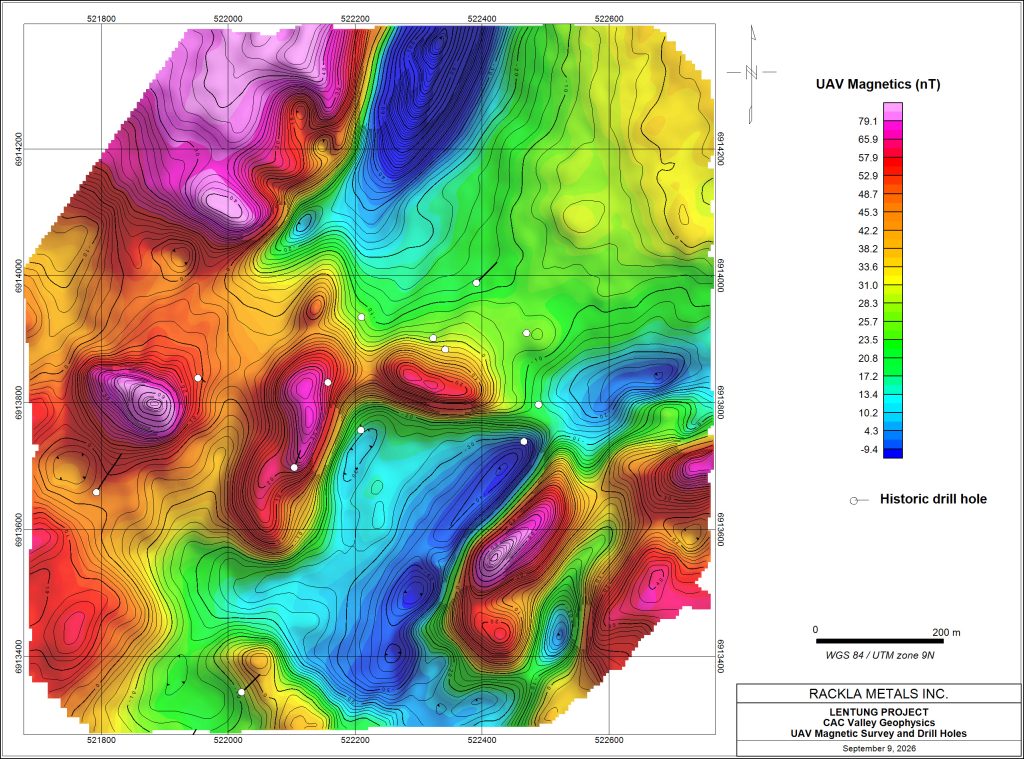
The Lened Pluton appears to be shallowly buried from the Central Zone all the way southwards into the CAC Valley. At the CAC Valley, the contact between the Lened Pluton and the limestone is relatively flat-lying. A number of holes have intersected tungsten skarns in the CAC Valley. Geophysics and additional drilling are planned for this area to determine the controls on the mineralization.
Geophysical Maps
Geophysical Signature of Lentung Tungsten Mineralized Zones
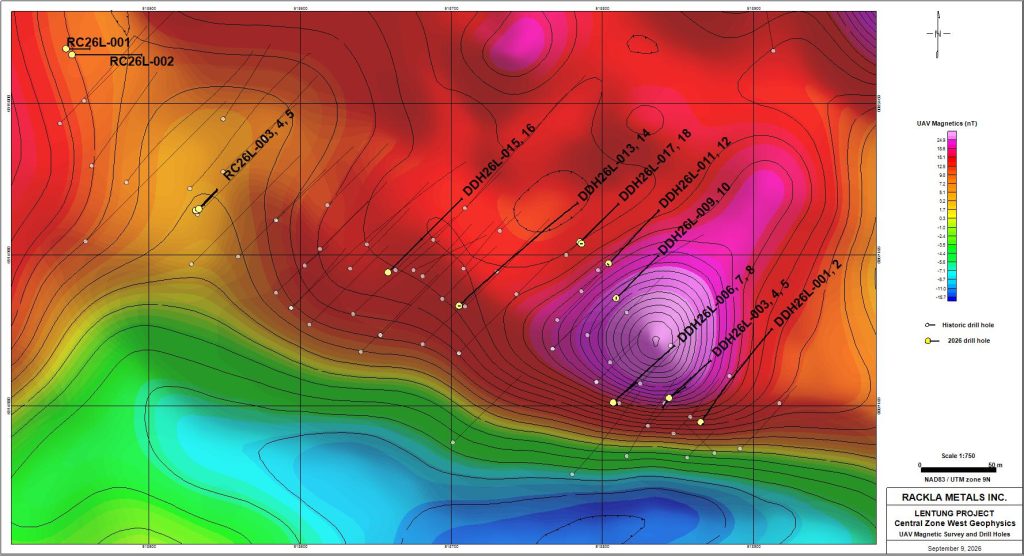
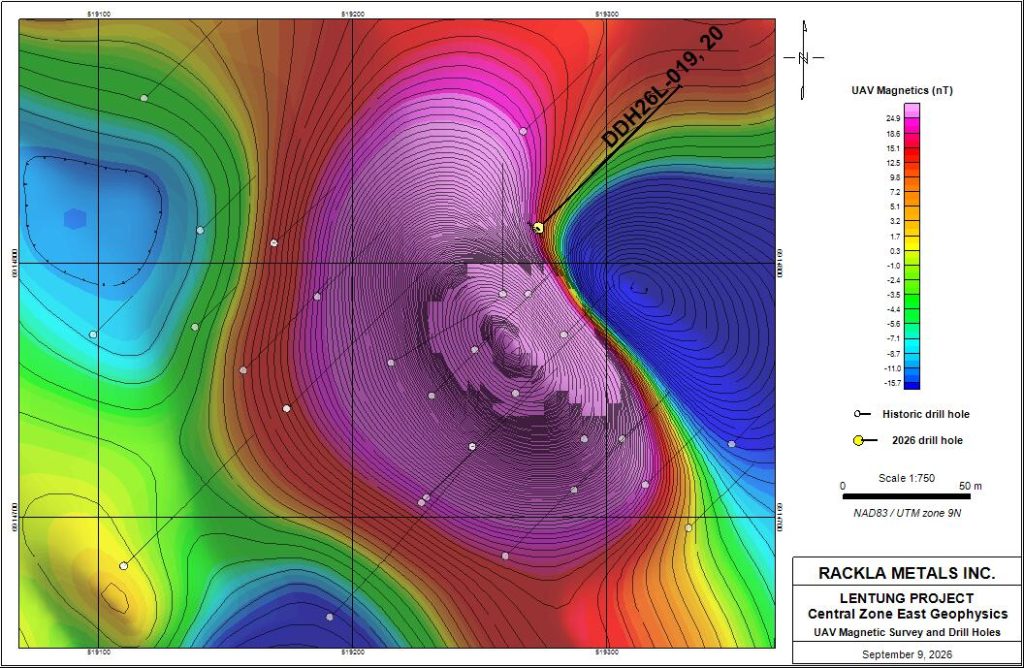
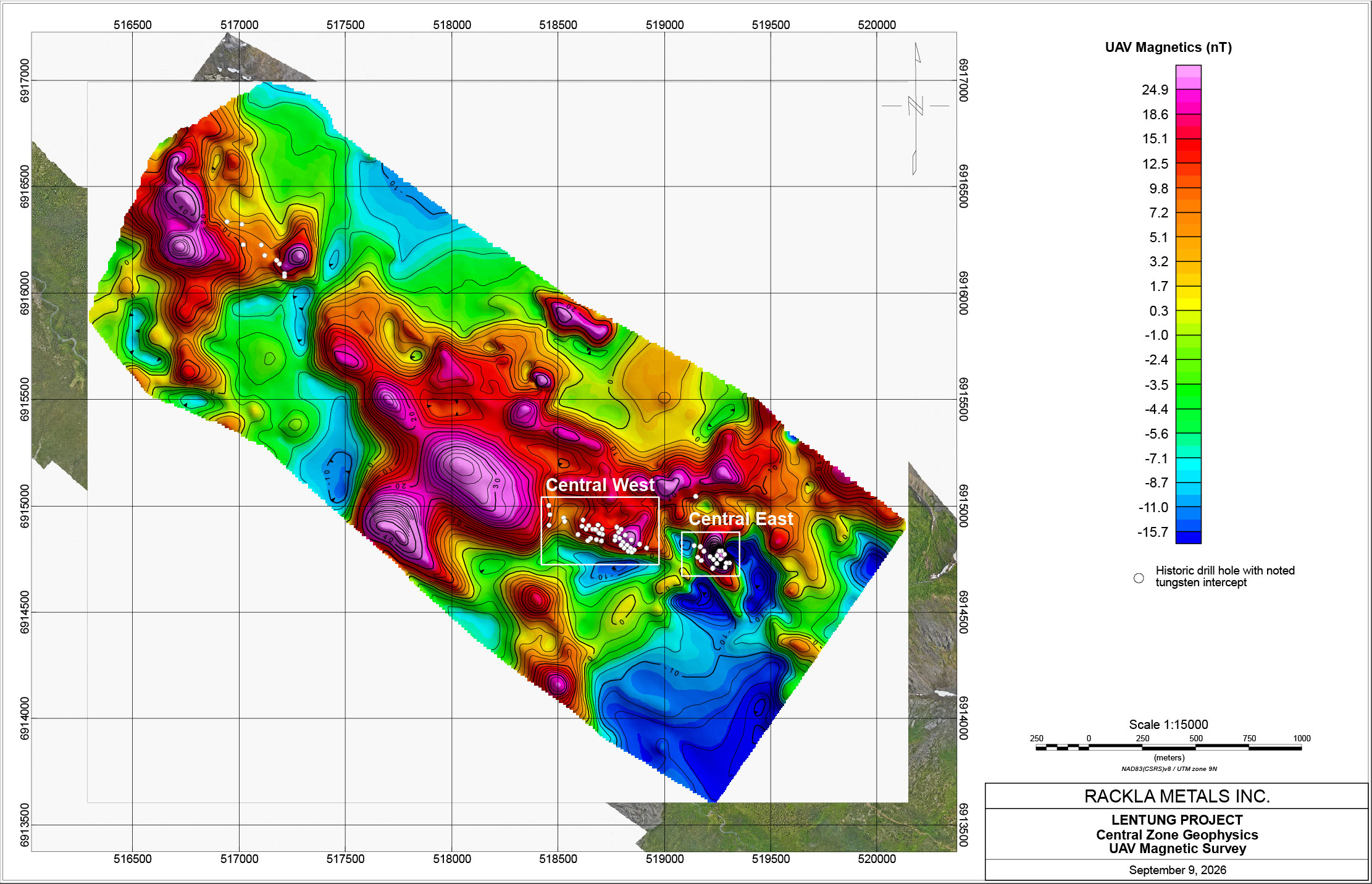
The Lentung tungsten occurrences are tungsten skarns on the margin of a Tungsten Suite monzo-granite. The tungsten occurrences typically have the tungsten mineral scheelite and an iron-sulphide mineral pyrrhotite associated with the deposits. Pyrrhotite is a magnetic mineral that is often readily detectable in magnetic surveys. The maps below illustrate the magnetic response from surveys conducted on the property in 2026. These surveys have identified several targets which remain to be tested.
Photos
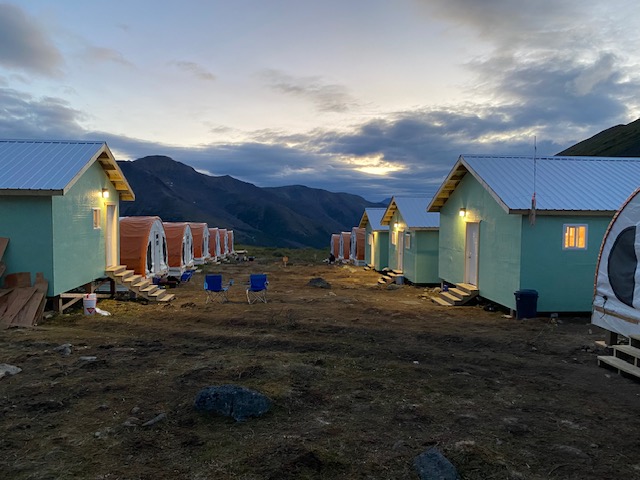
Central Zone
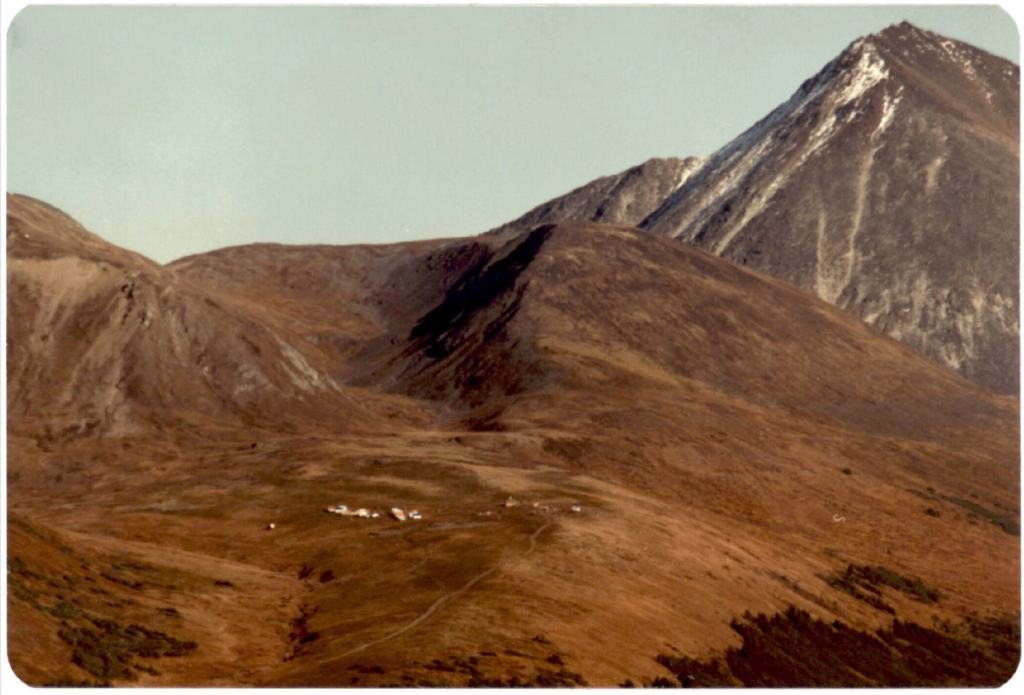
Far West Zone
Tungsten Facts
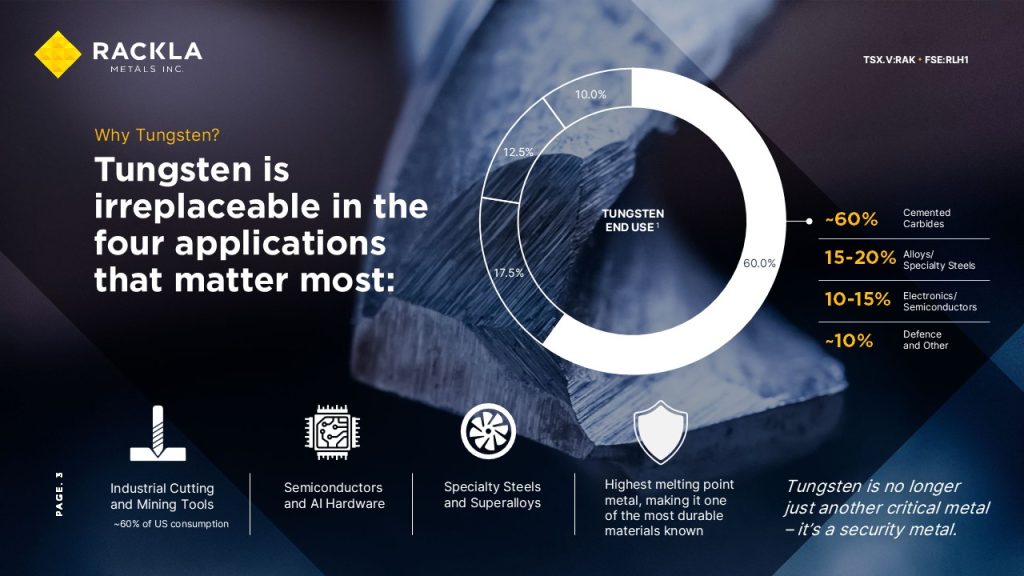
Tungsten (chemical symbol: W) is a unique metallic element distinguished by the exceptional physical properties that make it indispensable in modern industry. Among pure metals, it has the highest melting point and tensile strength, providing it with remarkable resistance to heat, stress, and corrosion. Tungsten is primarily used in the creation of metal alloys and specialty steel. Due to the unique properties of tungsten, tungsten alloys, and some tungsten compounds, the metal cannot be substituted in many important applications in different fields of modern technology. Tungsten plays a critical role in several advanced industries, including aerospace, medical, and electrical technologies. These enhanced materials are essential in the manufacturing of products requiring extreme durability, such as tool steels, cutting materials, hard surfacing components, armour plating, and medical instruments and devices.
Today, the majority of tungsten is used in manufacturing cemented carbides or hard metals. These are materials made by cementing tungsten carbide grains in a binder matrix of a tough nickel or cobalt alloy using the process of sintering. Tungsten carbide is the most popularly used form of the product, which has a hardness close to that of diamond. It is denser than steel and titanium, twice as hard as any steel grade, and has extremely high wear resistance. Due to these characteristics, the product is widely used in construction, metalworking applications, and mining. The global mining industry’s usage of tungsten carbide as drilling, boring, and cutting tools will likely propel the tungsten market growth as the demand for critical minerals increases.
Chinese Dominance
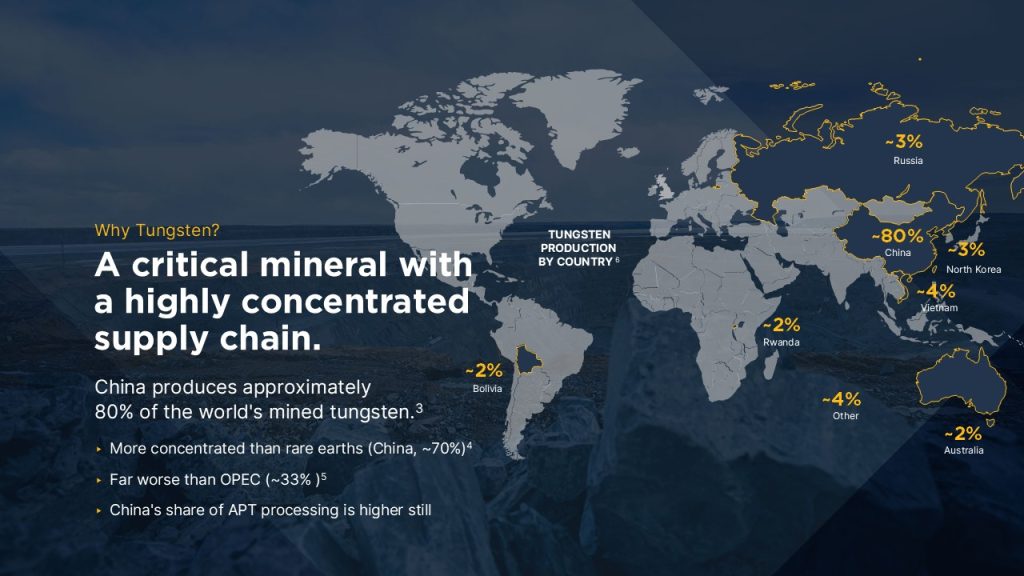
The global tungsten market is mainly driven by China, which is expected to continue to dominate both tungsten supply and consumption. China produces over 80% of the global tungsten supply. However, in recent years, China has become a net importer of tungsten concentrate. This change is due to the Chinese government’s increased regulation and restriction of tungsten ore exports, plus increased domestic demand due to the manufacturing of value-added tungsten products.
These factors, along with China’s high growth in the automotive, aerospace, mining, and electronics sectors are the main reasons behind its dominant market position.
Global Supply & Demand
Tungsten is typically priced according to Metric Ton Units (MTU) of Ammonium Para Tungstate (APT). Ammonium Para Tungstate is a white crystalline salt with the chemical formula (NH4)10(H2W12O42) · 4H2O, and it is a crucial raw material for tungsten products.
One MTU equals 10 kg and an MTU of APT contains approximately 7.93 kgs of tungsten. APT and concentrate prices are mainly based on quotations published twice weekly by London’s Metal Bulletin and other trade journals such as the International Tungsten Industry Association (ITIA).
The global demand for tungsten is forecasted to rise annually by 3-7% per annum according to the British Geological Survey and is predicted to outstrip available supply, which will place continued upward pressure on prices in the near-term. Tungsten alloys are expected to experience the fastest growth of any major product category, stimulated largely by increasing aerospace manufacturing demands. Cemented carbides are expected to continue to account for the largest share of processed tungsten consumption as increased production in the construction, mining, aerospace, machinery, and metal products industries will spur demand for tungsten-containing cutting tools, dies, drills, weights, and wear parts, among others.
Tungsten mill products (pure tungsten metal products), such as electrodes, lighting filaments, electrical and electronic contacts, sheets, wires, rods, etc., are expected to have steady growth, fueled by the demand for tungsten’s usage in a multitude of electrical and electronic applications.
References
NI 43-101 Technical Report Disclaimer:
Historical resource estimates and metal endowment reported on this website includes measured, indicated and inferred estimates unless otherwise indicated. Mineral resource estimates from NI 43-101 technical reports are believed to be relevant, reliable and the most current as of the date of the presentation. Rackla’s qualified person has not done any verification on these estimates.
NI 43-101 Technical Reports:
Delaney, B., Bakker, F.J., 2014. Technical Report on the Cantung Mine, Northwest Territories, Canada. Prepared for North American Tungsten Corporation Ltd. Effective date September 19, 2014.
Hantelmann, T., Jutras, M., Malhotra, D, 2025. Technical Report, Aurmac Property, Mayo Mining District, Yukon Territory, Canada. Prepared for Banyan Gold Corp. Effective date June 28, 2025.
Harvey, N., Gray, P., Winterton, J., Jutras, M., Levy, M., 2023. Technical Report, Eagle Gold Mine, Yukon Territory, Canada. Prepared for Victoria Gold Corp. Effective date December 31, 2022.
Jutras, M., 2022. Technical Report on the Raven Mineral Deposit, Mayo Mining District, Yukon Territory, Canada. Prepared for Victoria Gold Corp. Effective date September 15, 2022.
McCarthy, R., Saunders, E., Schmidt, I. G., Herrera, M., Miller, M., Jensen, S., Clarke, J., Dance, A., Burrell, H., Haggarty, S., Redmond, D., 2025. Independent Preliminary Economic Assessment for the Rogue Project Yukon, Canada. Prepared for Snowline Gold Corp. Effective date March 1, 2025.
Simpson, R. G., 2025. Florin Gold Project, Technical Report, Mayo and Dawson Mining Districts, Yukon Territory. Prepared for Gold Strike Resources Corp. Effective date December 5, 2025.
Simpson, R. G., 2026. RC Gold Project, NI 43-101 Technical Report, Dawson Mining District, Yukon Territory. Prepared for Sitka Gold Corp. Effective date February 25, 2026.
Non NI 43-101 Reports and Data Disclaimer:
Rackla Metals has obtained original data and internal company documents from Union Carbide Exploration Corporation that dates from 1977 to 1985. This data includes original drill logs, geochemistry, metallurgical, environmental, engineering and economic studies and reports. This presentation also references government publications and journal articles that reference these studies. The data, reports and articles are not NI 43-101 compliant and have not been verified by a qualified person. Rackla Metals is not treating these as current. Accordingly, investors should not place undue reliance on this information.
Non NI 43-101 Reports and Articles:
Burston, M. J., 1983. The Lened Tungsten Deposit 1982 Report. Union Carbide Exploration Corp. internal company year-end report dated January 1983.
USGS, Scientific Investigations Report 2020–5085, Grade and Tonnage Model for Tungsten Skarn Deposits—2020 Update. From Forster, C.N., Burson, M.J., and Glover, J.K., 1979, The Lened tungsten deposit—Oral presentation at the 7th Geoscience Forum, Whitehorse, Yukon Territory, December 2–4, 1979.
Wollery, R.G., 1982. Union Carbide Exploration Corporation, Metals Division, Lened Project, Operating Cost Estimate. Union Carbide internal company memorandum dated November 10, 1982. Rackla Metals is not treating these as current operational parameters.
Coming Soon: Reports
